Amid U.S. Conflict, Opportunity for Peace in Taiwan Strait
China Times Editorial, April 5, 2026
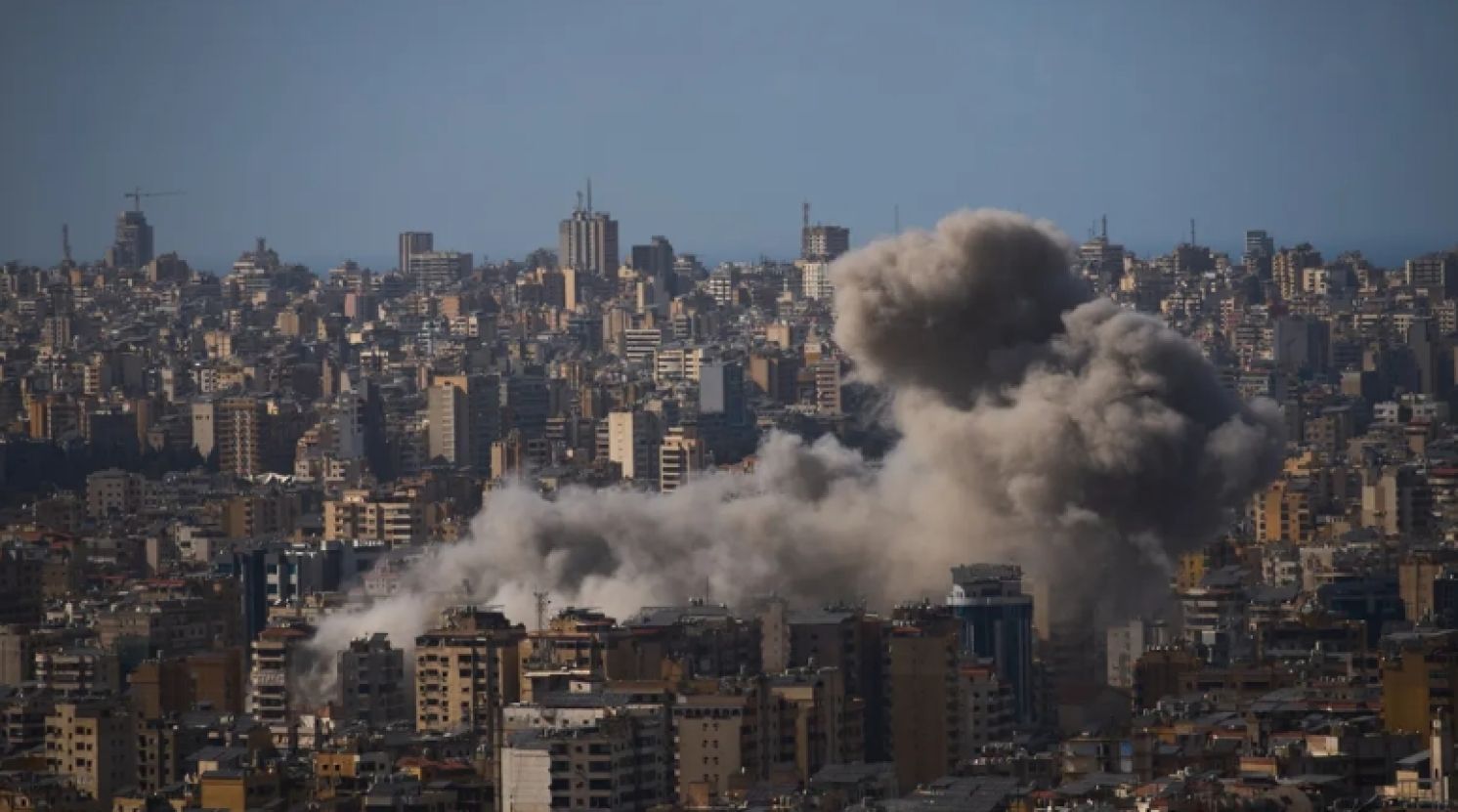
Though the smoke of war in the Middle East and the tensions across the Taiwan Strait are separated by thousands of miles, they echo and interact on the broader geopolitical chessboard of U.S.-China competition. The second term of President Donald Trump of the United States is weathering serious challenges in foreign policy. They present China with new strategic opportunities in addressing its core interests. At this juncture, mainland China’s invitation for Chairwoman Cheng Li-wun of the Kuomintang (KMT) to visit Beijing and meet with Chinese President Xi Jinping is not only a breakthrough in cross-strait relations, but also a precise and proactive strategic move amid a complex and shifting international landscape, demonstrating Beijing’s confidence and flexibility in addressing Taiwan.
The military confrontation between the United States and Iran has evolved from initial expectations of a “quick victory” into a costly stalemate. The conflict has entered an awkward situation of being “unable to win and unable to afford to lose.” Although Mr. Trump has considered deploying ground forces, a ground invasion would drag U.S. troops into a new quagmire with incalculable costs; yet a unilateral withdrawal would signify a complete strategic failure, severely undermining American credibility worldwide.
In the face of escalating tensions in the Middle East and their impact on the global economy, international mediation efforts have become particularly urgent. China and Pakistan have actively sought to mediate, attempting to build channels of communication to de-escalate the situation. Leveraging its unique relationships with the United States, Iran, Saudi Arabia, and others, Pakistan has emerged as the most promising mediator, even facilitating a four-party foreign ministers’ meeting. China and Pakistan have also issued a five-point peace initiative calling for disputes to be resolved through diplomacy. However, the core demands of the United States and Iran diverge sharply, with structural contradictions in their positions and virtually no foundation of mutual trust. Regardless of the outcome of Beijing’s involvement, the international images of China and the United States have already begun to shift subtly, and trust in the United States among Gulf countries and its traditional allies is wavering.
For Mr. Trump, the year-end midterm elections are fast approaching, bringing mounting domestic political pressure. The escalating military conflict has driven up global oil prices, directly impacting domestic inflation in the United States, and his approval ratings have consequently begun to decline. He urgently needs a “victory narrative” to consolidate his base and support the Republican Party’s electoral prospects. Mr. Trump is in need of a “limited achievement” to justify a strategic exit—for example, claiming to have significantly weakened Iran’s military capabilities, curbed its nuclear threat, or ensured maritime security. Under this logic, a ceasefire is not a failure, but a packaged victory.
In other words, what Mr. Trump truly needs is not a comprehensive victory on the battlefield, but rather a “face-saving exit” that can reasonably conclude the war—something that requires coordination among major powers to set the stage.
It is against this backdrop that the originally scheduled “Trump-Xi Meeting” in early April was postponed, a move whose strategic implications are worth noting. Mr. Trump’s delayed China visit, initially intended as a form of pressure on Beijing, now reflects his preoccupation with the Iran issue. In dialogue with China, he has lost leverage and initiative, while his need for China continues to grow. This structural contradiction has greatly constrained the United States’ ability to provoke or maneuver on the Taiwan issue. Washington is no longer capable of bearing the risk of opening a “second front” in the Taiwan Strait and is increasingly in need of China’s assistance on the Iran issue. As a result, U.S. policy toward Taiwan is likely to become more cautious in the short term, creating space for Beijing to handle Taiwan-related matters.
At this moment, the Chinese Communist Party’s (CCP) decision to invite Ms. Cheng to visit the mainland and meet with Mr. Xi carries significance far beyond cross-strait party exchanges. It also sends a clear signal to the international community: Beijing has both the capability and confidence to steer the process according to its own pace and approach, without interference from external forces. This further constrains the space for the United States to play the “Taiwan card.”
In response to Ms. Cheng’s visit to the mainland, the administration of President Lai Ching-te has largely limited itself to routine political criticism, questioning the trip as a “conditional exchange” or an attempt to “divide Taiwan’s unity.” Such reflexive reactions may underestimate the complexity of the current international situation. While the Lai administration continues to expect sustained high-level American involvement in the Taiwan Strait, Mr. Trump is considering how to leverage China to extricate himself from the Middle Eastern quagmire. Persistently labeling cross-strait exchanges not only fails to ease tensions but may instead place Taiwan in a more passive and isolated position. The Lai administration should take a more constructive view of Ms. Cheng’s mainland visit and, with goodwill, hope that the Cheng-Xi Meeting can contribute to peace across the Taiwan Strait.
From: https://www.chinatimes.com/opinion/20260405002381-262101?chdtv